Empowering Reading: Awakening the Heart Book Review
A review of Awakening the Heart: Reclaiming Identity After Addiction, by Rory Van Tuinen. 2026. ISBN: 979-8-9953084-0-9
“The most consistent and longest relationship in my life was with heroin.”
Are you looking for a book that takes a deeply personal and raw examination of mental health, trauma, addiction, recovery, and rebirth? Are you hoping to find solutions that go beyond the traditional methods of 12-step programs and rehabilitation centers? Or have you heard something about the power of psychedelics to break addiction and are searching for more information? Yes? Then this well-written account of addiction to recovery is a must-read.
“Addiction didn’t start with drugs. It began much earlier, in the ways I learned to disconnect from myself. At the time, I thought I was adapting to the world around me.”
Powerful words from a deeply moving and inspiring story of a man with a lifelong opioid addiction who finally freed himself to offer hope for others (and their loved ones) struggling with substance abuse. This book is particularly valuable for addicted people, their loved ones, recovery professionals, and anyone interested in alternative approaches to healing. It’s an important story to share since psychedelics are still seen by many as “drugs,” and which are still mostly illegal in the United States and around the world.
To appreciate the significance of Van Tuinen's story, it helps to understand the scale of the opioid crisis that continues to affect millions of people. Addiction to opioids has been a scourge that has deeply affected many around the world.
According to the National Center for Drug Abuse Statistics:
Nearly 9 million people misuse opioids in a year;
Opioids are a factor in at least 7 of every 10 overdose deaths;
Almost 80,000 people die every year from opioid overdose;
About two-thirds of all overdose deaths are attributed to synthetic opioids, primarily fentanyl;
About 217 die every day from opioid overdoses.
Author Rory Van Tuinen chased opioids for much of his life, overdosing countless times (the first at age 20), but was always revived. He tried rehab more than 10 different times, but it was the work of psychedelics combined with therapy, integration, and community that finally transformed him and broke his physical and mental addiction to opioids.
This book is his story of hell and redemption. It’s not a book proclaiming psychedelics as miracle cures, but it does expose the systemic misunderstandings and failures in our traditional recovery model. It also reveals flaws and biases in our healthcare system, especially regarding holistic tools like plant medicines.
Through five parts and 24 chapters, this book is meant to expand the conversation on the grip that addiction has on people and the need to discuss, improve, and accept multiple paths to recovery, whether traditional or through psychedelics.
Van Tuinen writes with honesty and vulnerability, balancing deeply personal experiences with broader reflections on addiction, trauma, and healing. The narrative is engaging and accessible, though readers seeking a highly scientific examination of psychedelic therapies may find the book more memoir than research-based analysis – but that is also the book’s strength.
“People are not dying because recovery is impossible. People are dying because access is. We have built a system that criminalizes survival while restricting the very tools that make healing possible. We tell people to get better, but we deny them the means to do so safely, legally, and with dignity. This has to change.”
The author’s descent into addiction was an accumulation of events in childhood. “All these… formed an abyss, a downward pull, a hollow in my soul that I didn’t yet know how to defend. And into that hollow, addiction would eventually begin to grow. When relief finally appeared, I didn’t question its intention.”
Van Tuinen was introduced to opioids following a car crash after attending a party in which he used the alcohol as a coping mechanism. “Looking back, the accident wasn’t just physical trauma. It was an intersection where grief, injury, access, and neglect converged.”
When the prescription opioids ran out, the author turned to heroin. “Heroin didn’t feel like darkness; it felt like warmth, like a sun rising in a sky that had been cold for a long time. I didn’t realize then that it was a false sun, one that would eventually eclipse everything else.”
“People talk about addiction as if it begins with a bad choice, a weak moment, or a moral slip. That’s not how it works. Addiction doesn’t start with the drug; addiction starts with a reason, a wound, a longing, a whisper that grows too loud to ignore,” the author declares.
The Work of Psychedelics in Assisting in the Healing of Substance Abuse
“I do not present plant medicine as a miracle cure.”
Amazingly, the author started his healing journey with a home-brewed drink of Ayahuasca (a plant-based tea made from two plants native to South America), but because he knew very little about psychedelics and the importance of integration, while the medicine did shift something inside him and helped him see that healing was possible, it was not enough, and he went back to a period of using opioids and methadone.
A quick side note on methadone, an opioid often used to help people with opioid use disorder. While the author admits that methadone saved his life, he also used street opioids while on methadone, and even when he stopped taking those opioids, he struggled greatly to get off the methadone. He also exposes that some of the same companies that supplied the opioids that have led to this addiction crisis also manufacture the methadone that is supposed to be the solution.
It would take an international journey to cure his physical addiction to opioids… first to Canada, where he found a doctor willing to help him taper off methadone, and then to Mexico, where he was able to legally consume ibogaine, a plant-based psychedelic native to Africa.
As his ibogaine journey concluded, he says he felt something shift. “Opiates were gone, not masked, gone. My physical dependency and withdrawals were completely abolished, a unique feature of ibogaine.”
After returning from the ibogaine experience, he no longer had the physical addiction, but he was left with a need for understanding and closure – and he still did not truly understand the need for integrating psychedelic experiences.
This led him to go back to Canada one more time – this time to ingest a powerful dose of psilocybin. “For the first time in my adult life, the part of my identity that clung to opiates let go,” the author writes.
During this time, he not only worked with a therapist, but also asked loved ones to help him integrate all the visions, lessons, and more that he received from his psychedelic experiences. This integration – doing the work of understanding what to do with the information and experiences that arise in the journey – is essential for making long-lasting, sustained positive changes.
“Transformation isn’t the medicine. It’s what you do with yourself, after the medicine ends,” writes the author.
A Deep Reflection Regarding the U.S. Healthcare System
Van Tuinen writes: “The way the medical system in the United States is structured is not built for people like me or people struggling with addiction, trauma, neglect, or abuse. It is built in many ways to profit from suffering, especially from those who still have the means to pay for treatment. But what happens to the ones who don’t? What happens to the person who has already lost everything, who cannot afford medical care, cannot access compassionate treatment, and who is legally barred from pursuing the very forms of healing that might save their life?”
He adds: “The treatments that ultimately helped me most, ibogaine and psilocybin-assisted healing, were not available where I lived. They were not discussed openly in the clinics I attended. They were not offered by the professionals tasked with keeping me alive. In many settings, they were not even allowed to be spoken about without judgment.”
Who Should Read This Book?
As you might be able to discern, I highly recommend Awakening the Heart and suggest it for:
People struggling with substance-use disorders;
Family members seeking to better understand addiction;
Mental-health professionals;
Readers interested in psychedelic-assisted therapies;
Anyone interested in stories of resilience and personal transformation.
Final Thoughts and Words About Awakening the Heart
“My story is not merely about addiction and drugs. It’s a story about mental health, identity, and the responsibility of living.”
We need to do better with all of our mental health issues, but especially with addiction and substance use.
But I would be remiss without commenting on one part of the book that touched me deeply. For most of my childhood and even into adulthood, I have been told to “stop being so sensitive” and to “stop taking things so personally.”
The author was one of these boys and is one of these men. He writes, “Most men don’t understand the gift of sensitivity. We knowingly and intentionally act to disguise it. What many of us never realize is that the very feelings we try to bury are often the key to finding our identity.”
To me, vulnerability and sensitivity are critical components of the human condition, and boys and men should not be perceived as weak or condemned for expressing these traits. These are not weaknesses, but signs of courage, self-awareness, and emotional depth.
The author’s final words: “Sobriety isn’t just the absence of drugs. It’s about the presence of self and feeling safe with myself in those moments… Addiction is not only a chemical problem. It is an identity fracture. It is a trauma wound. It is a spiritual collapse.”
If you are curious about the potential of psychedelics for yourself or a loved one, please see our extensive resources here: Psychedelics and Plant Medicine: Empowering Advice and Articles.
Find more book reviews and advice for living a happy, healthy, and healing life here.

Dr. Randall Hansen is an evangelist, educator, and thought-leader... helping the world heal from past trauma and the poor food system. He is founder and CEO of EmpoweringSites.com, a network of empowering and transformative Websites, including EmpoweringAdvice.com.
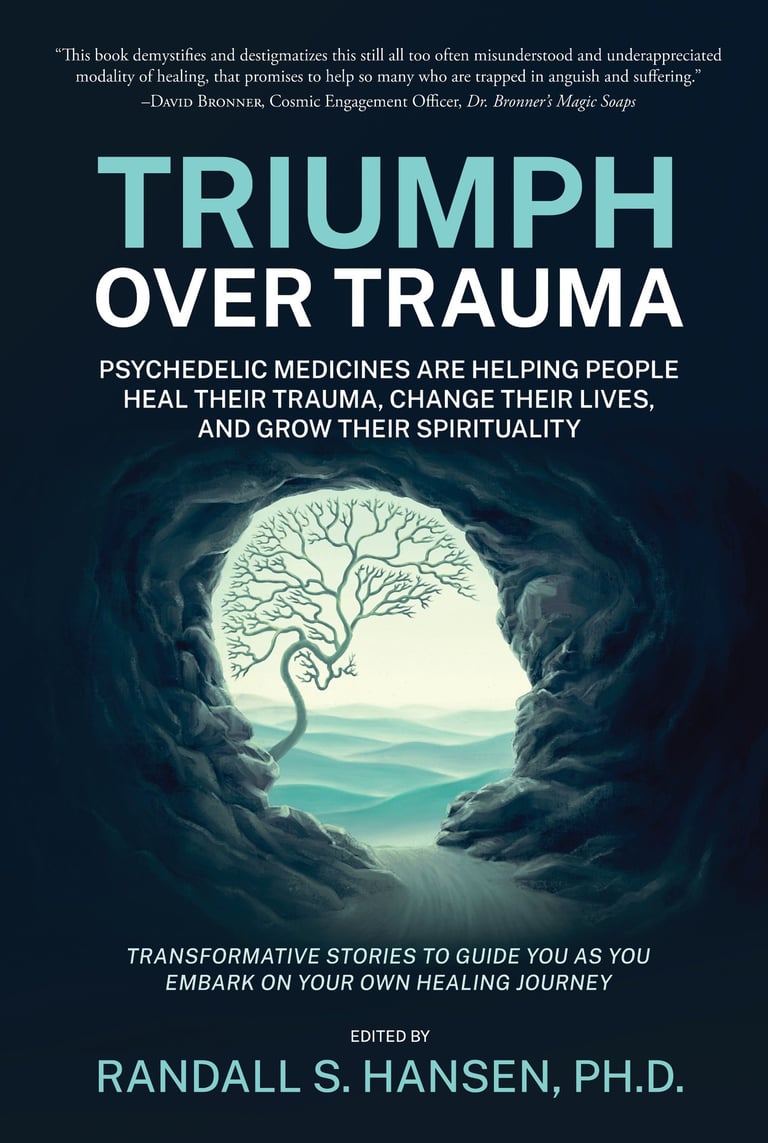
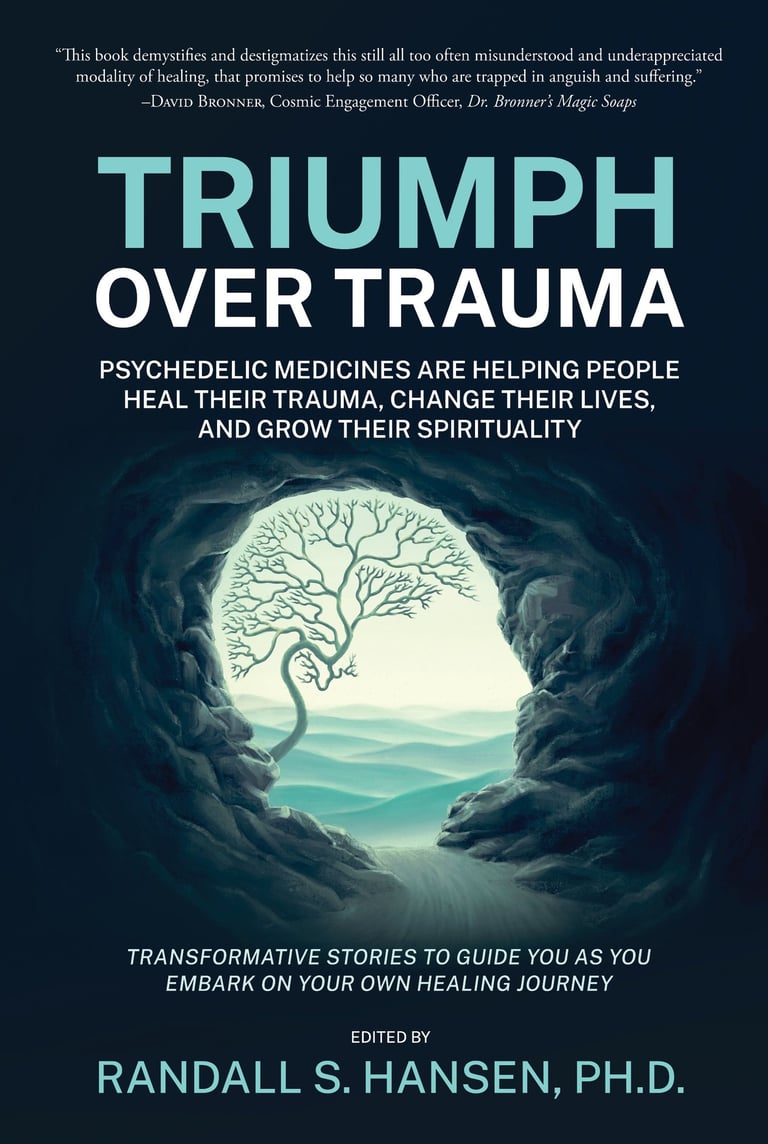
He is the author of the groundbreaking Triumph Over Trauma: Psychedelic Medicines are Helping People Heal Their Trauma, Change Their Lives, and Grow Their Spirituality and the well-received HEAL! Wholeistic Practices to Help Clear Your Trauma, Heal Yourself, and Live Your Best Life.
The third book in the Wholeistic Healing Trilogy is the game-changing The HEALing Revolution Diet: A Science-based Approach to Heal Your Gut, Reverse Chronic Illnesses, Lose Weight, Clear Your Mind, and Increase Longevity.
Dr. Hansen's focus and advocacy center around true health and healing journeys that results in being able to live an authentic life filled with peace, joy, love. Learn more by visiting his personal Website, RandallSHansen.com. You can also check out Dr. Randall Hansen on LinkedIn.
Expert advice on ways to make your life healthier, simpler, better, more fun!