
Why and How to Reduce Your Triglycerides Naturally
Don’t just focus on cholesterol. One of the most misunderstood and undervalued measures of heart health, metabolic health, and overall health is triglycerides.
Triglycerides are a type of fat in your blood that is typically measured and reported in the standard lipid panel blood test done by your healthcare provider. Measures of cholesterol are also included in the standard lipid panel, and too often healthcare professionals focus exclusively on the cholesterol (especially the so-called “bad” cholesterol), and not nearly enough on the triglycerides, which, when high, are a cause of inflammation and clogged arteries.
Unlike cholesterol, where your diet has a minimal effect on its levels, your diet has a significant impact on your triglyceride levels.
Triglycerides are fat, but guess what? Dietary fat does not cause a rise in your triglyceride levels. Instead, it’s refined sugars and carbs, along with alcohol, sugary beverages, and many ultra-processed foods that cause this fat buildup in your blood – especially when we are eating larger portions than ever before.
When we consume more sugar, especially fructose, than our cells need for energy, our liver converts the excess into triglycerides and sends them to our fat storage. Thus, a diet high in conventional breads, pastas, white rice, baked goods, desserts/candy, cereals, granola, waffles/pancakes, chips, and crackers, especially when combined with sugar beverages such as fruit juices, sodas, and sports drinks, leads to a buildup of fat in our bodies.
Your triglyceride levels matter … even if your cholesterol numbers look fine; even if you generally feel “healthy.”
Why should you be concerned with your triglyceride level? First, it is a marker of metabolic health. Second, there are no symptoms related to rising triglyceride levels (besides some weight gain), thus it is an invisible health marker. Third, high levels suggest a future of cascading health problems, ranging from chronic inflammation and insulin resistance to heart attacks, strokes, dementia, and cancer.
How to Understand Your Triglyceride Levels
If you go to the doctor regularly, you are probably pretty familiar with the lipid panel results, even if the triglyceride levels are often ignored. If not, here is a quick overview.
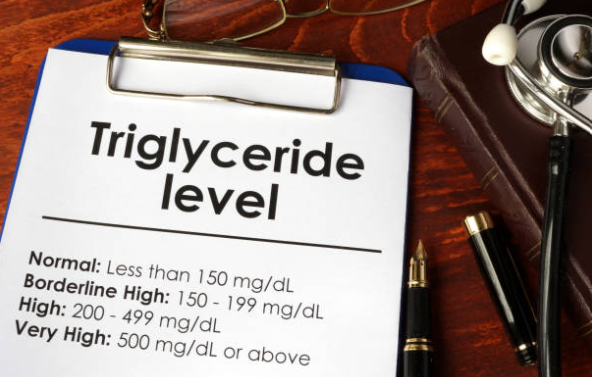
Triglyceride levels are measured in milligrams per deciliter of blood (mg/dL). For adults…
Normal triglycerides: Under 150 mg/dL
Borderline high triglycerides: 150 to 199 mg/dL
High triglycerides: 200 to 499 mg/dL
Very high triglycerides: 500 mg/dL or higher
As these levels rise and stay elevated, your health risks increase for all the conditions mentioned earlier, as well as for one of the most painful medical conditions -- the sudden swelling in the pancreas called acute pancreatitis.
About 30 years ago, when I started my health journey, my triglyceride levels were at borderline levels, close to 180 mg/dL; they started dropping sharply after months of a healthy keto-type diet and an increase in daily exercise. Today, my triglyceride level is 49 mg/dL.
How to Reduce Your Triglyceride Levels… Naturally
The factors that will help you reduce your triglyceride levels are also – not surprisingly – excellent for improving your overall metabolic health and helping to prevent the chronic health conditions that are impacting so many people.
Here are 10 ideas for improving your triglyceride levels and improving your overall health:
1. Focus on Mindful Eating and Portion Sizes. Are you aware that most of us are eating too much food, often while distracted? Over the past few decades, portion sizes have significantly increased, with many foods now served in portions that are two to three times larger than in the past, and excess calorie consumption raises triglycerides.
2. Stay Hydrated With Water. Skip all the sugary “diabetes” drinks, including sodas, coffees, fruit juice, etc. We need hydration, so replace these with water. Staying well-hydrated supports metabolism, which may also help reduce triglycerides.
3. Reduce Refined Sugar Consumption. The most important thing you can do is reduce your refined sugar consumption, especially fructose. This means eliminating almost all ultra-processed convenience foods – whether packaged, frozen, canned, bottled, or fast foods – which often contain more than one added sugar.
4. Reduce Refined Carbs Consumption. People do not need to go full-on keto, but we need to eliminate low-quality refined carbs and refined grains, which are also typically found in many ultra-processed foods, as well as all conventionally baked food items. Ditch the white flour, white rice, and white sugar.
5. Reduce Alcohol Consumption. Without getting too involved in the process, it’s important to understand that the body basically converts all alcohol consumption similarly to sugar consumption, converting the sugars into fats.
6. Increase Your Omega-3 Fatty Acid Consumption. Because of the massive quantity of vegetable (seed) oils people consume when eating fried and convenience foods, we have a massive imbalance between Omega-6 and Omega-3. Your first step should be stopping seed oil consumption while also increasing your consumption of foods with Omega-3, such as fatty fish or with a quality Omega-3 supplement. Research shows that doing this can lower triglycerides by 20–50 percent in people with high triglycerides.
7. Increase Healthy Fiber (Complex Carbs) Consumption. If you enjoy your carbs, switching to foods with more complex carbs, especially those rich in soluble fiber, may help modestly reduce triglyceride levels. Studies show that 10–25 grams of soluble fiber per day can reduce triglycerides by 5–15 percent. Fiber is also important for gut health and your gut microbiome.
8. Increase Your Daily Exercise and Movement. Regular movement and exercise are among the most effective natural ways to lower triglyceride levels, as well as one of the most important things you can do for overall health and longevity; most of us are dangerously sedentary, sitting all day and night and then going to bed. Your goal should be a daily combination of aerobic (raising your heart rate) and resistance (working/strengthening your muscles) exercises.
9. Reduce Chronic Stress. Chronic stress triggers a cascade of hormonal and metabolic changes that increase triglyceride production. This prolonged physiological or psychological response to long-term internal or external stressors also negatively affects overall health, including increased levels of cortisol, increased potential of insulin resistance, and increased pro-inflammatory cytokines; it is imperative to work on reducing this type of stress, especially because our coping mechanisms for stress (drinking, drugs, food) only make matters worse.
10. Focus on Quality Sleep. Poor sleep, whether too little, too fragmented, or inconsistent, can significantly raise triglyceride levels, while consistent, high-quality sleep helps lower them. Quality, consistent sleep also plays such a vital role in overall health, because sleep is the time when the body and brain do restorative and repair work. Adults typically need 7-9 hours of sleep.
For additional helpful tips, ideas, and resources on these 10 topics, please see the end of the article.
Final Thoughts on Triglycerides
Elevated triglycerides are not a life sentence; they are a signal, and signals can be acted upon. Unlike many health markers, triglycerides often respond quickly when diet and lifestyle habits begin to change toward healthier choices and activities.
That said, it’s time to take a hard look at your triglyceride levels, and if they are high – even above 100 – it’s time to focus on improving your health by reducing those levels.
Because 10 tips can be a bit overwhelming, it might be best to start with the two areas that can have the biggest impact – improving your diet to a mix of real foods and partaking daily in both aerobic and resistance training. Over time, these small choices compound, and your lab results will reflect it.
Yes, there are pharmaceutical interventions for reducing triglycerides, but as is my typical advice, these should only be used in emergency or in cases of last resort – after all, the holistic measures included here have been tried consistently because all these medications include adverse effects.
That said, if you are already on a medication and happy with it, please keep doing so – but please do NOT forget to also implement the changes suggested in this article.
Additional Triglyceride and Metabolic Health Resources
If you want to go deeper into any of these areas, here are evidence-based resources:
Dr. Randall Hansen is an evangelist, educator, and thought-leader... helping the world heal from past trauma and the poor food system. He is founder and CEO of EmpoweringSites.com, a network of empowering and transformative Websites, including EmpoweringAdvice.com.
He is the author of the groundbreaking Triumph Over Trauma: Psychedelic Medicines are Helping People Heal Their Trauma, Change Their Lives, and Grow Their Spirituality and the well-received HEAL! Wholeistic Practices to Help Clear Your Trauma, Heal Yourself, and Live Your Best Life.
The third book in the Wholeistic Healing Trilogy is the game-changing The HEALing Revolution Diet: A Science-based Approach to Heal Your Gut, Reverse Chronic Illnesses, Lose Weight, Clear Your Mind, and Increase Longevity.
Dr. Hansen's focus and advocacy center around true health and healing journeys that results in being able to live an authentic life filled with peace, joy, love. Learn more by visiting his personal Website, RandallSHansen.com. You can also check out Dr. Randall Hansen on LinkedIn.




Expert advice on ways to make your life healthier, simpler, better, more fun!